Sensory & Neurodiverse Built Environment Assessment — Federal Veterans Services Agency
Standard barrier-free criteria were designed for mobility and sensory impairment. They were not designed for PTSD or traumatic brain injury. We built a framework that was.
Project Overview
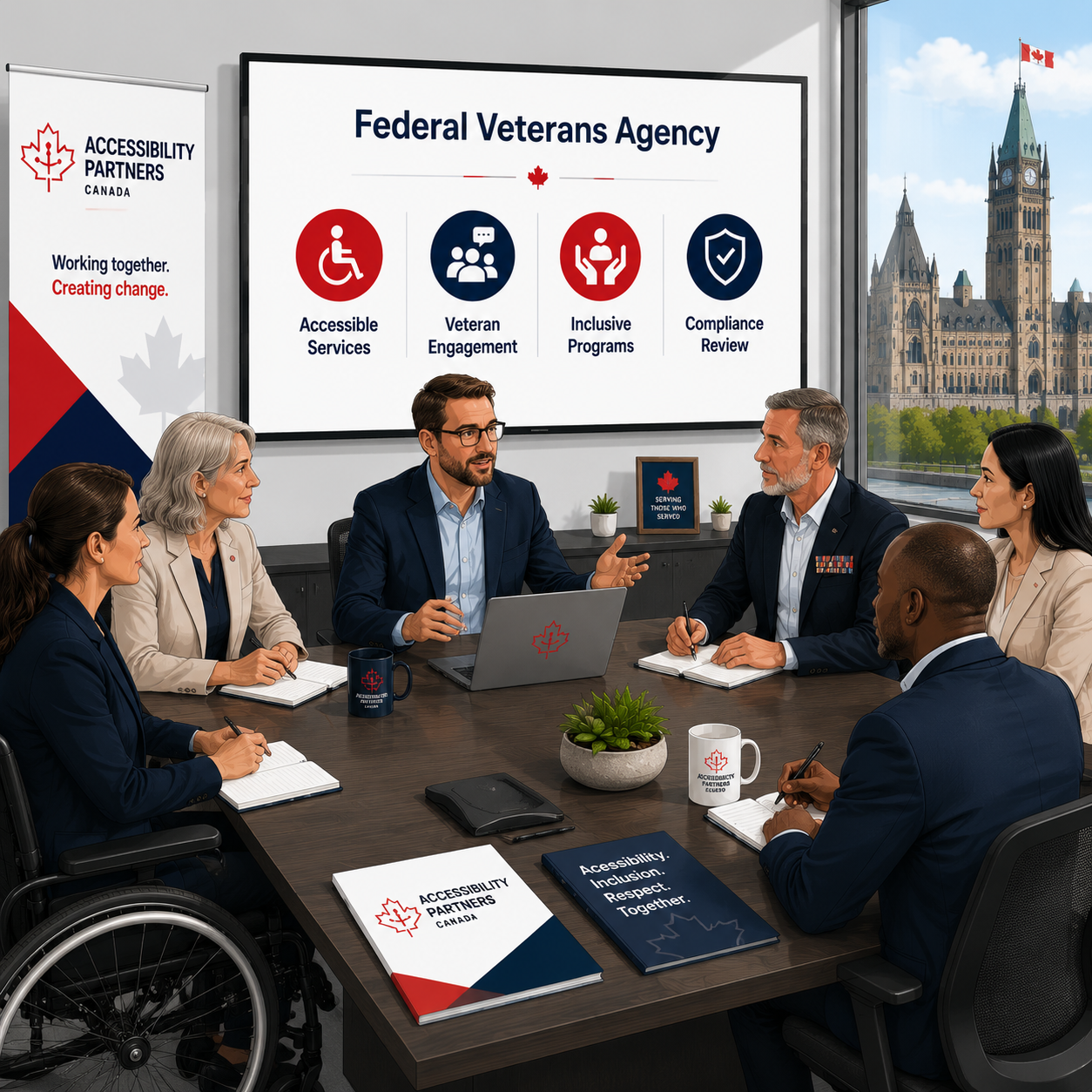
A federal agency providing services to Canadian veterans engaged Accessibility Partners to assess four field offices. Many of the agency’s clients live with physical disabilities, PTSD, traumatic brain injuries, and conditions that affect mobility, cognition, and sensory processing simultaneously. The agency needed an assessment that went beyond the standard barrier-free checklist.
The Limits of Standard Barrier-Free Assessment
Conventional built environment assessments focus on physical barriers: ramp grades, door clearances, counter heights, parking stall dimensions. These matter, and we assessed them. But for a population that includes veterans with PTSD, certain lighting configurations, acoustic environments, or spatial arrangements can be actively triggering. For veterans with TBI, wayfinding that seems adequate may be genuinely disorienting. A standard assessment framework would have missed these entirely.
Our Sensory & Neurodiverse Assessment Approach
We used standard barrier-free criteria as the foundation and built an expanded assessment layer on top of it covering the sensory environment lighting levels and quality, acoustic properties, visual clutter as well as wayfinding legibility, quiet space availability, and universal design considerations for spatial configuration and interview room layout.
Every space from parking lot to interview room was assessed against both standard and expanded criteria. Each office received a consolidated remediation report distinguishing standard barrier-free items from the expanded sensory and neurodiverse findings.
Project Snapshot
Industry
Federal Government
Location
Canada
Compliance Standard
Accessible Canada Act
Key Result
4 offices · Expanded sensory framework
Built Environment Assessment Results
Services Used


Legislation: Accessible Canada Act
Talk to Us About Neurodiverse Accessibility
Every engagement we take on is led by a credentialed senior consultant — not delegated to junior staff after the proposal is signed. We hold Government of Canada Standing Offer #1 national ranking, $5M errors and omissions insurance, and twelve years of experience across federal, provincial, municipal, and private-sector clients.
If your organisation serves populations with sensory, cognitive, or neurodiverse needs and wants an assessment that goes beyond standard barrier-free criteria, we would welcome the conversation.
Frequently Asked Questions
+
What does a neurodiverse accessibility assessment cover that a standard built environment audit does not?
It reviews sensory and cognitive factors such as lighting, acoustics, visual clutter, quiet spaces, and wayfinding.
+
How do you assess sensory environment factors like lighting and acoustics?
We evaluate how lighting, noise, and environmental conditions may affect comfort, focus, and navigation for users.
+
Does the Accessible Canada Act require organisations to address neurodiverse accessibility needs?
The ACA requires organisations to identify and remove accessibility barriers, which can include barriers affecting neurodiverse users.
+
How are standard barrier-free findings and expanded sensory findings reported together?
Both sets of findings are included in one consolidated report with clear remediation priorities.