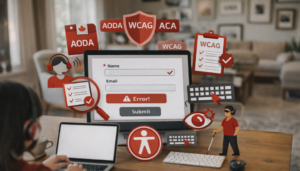

The Accessible British Columbia Act, introduced in 2021, marks a significant step forward in creating a more inclusive and equitable society. This landmark legislation aims to identify, remove, and prevent barriers that impede the full participation of individuals with disabilities in British Columbia.
By fostering accessibility in public and private spaces, the act reflects a commitment to improving the quality of life for all residents while ensuring compliance with human rights and accessibility standards.
What is the purpose of the BC Accessibility Act?
The primary purpose of the BC accessibility act is to create a barrier-free province by addressing physical, systemic, and communication obstacles. It seeks to:
- Promote the inclusion of people with disabilities in all aspects of community life.
- Enhance accessibility in public spaces, workplaces, and digital environments.
- Provide a legal framework for organizations to identify and remove barriers proactively.
- Encourage collaboration between government bodies, private entities, and community organizations to develop long-term accessibility strategies.
Key Provisions of the Accessible British Columbia Act
The Accessible BC Act outlines several provisions to ensure meaningful progress toward accessibility:
- Accessibility Standards Development: Establishing clear standards for various sectors, including transportation, education, healthcare, and digital services, to enhance accessibility.
- Public Consultation: Involving individuals with disabilities and advocacy groups in developing and reviewing accessibility policies.
- Accessibility Committees: Mandating the creation of accessibility committees within organizations to oversee and implement accessibility initiatives.
- Accountability Mechanisms: Implementing reporting and monitoring requirements to ensure compliance with accessibility standards.
- Barrier Identification and Removal Plans: Organizations must develop actionable plans to identify and eliminate barriers.
Organizations and Sectors Covered in the Accessible British Columbia Act
The accessibility act BC applies to a wide range of organizations and sectors, including:
- Public Sector: Provincial and municipal governments, public service agencies, and Crown corporations.
- Private Sector: Businesses of various sizes, particularly those offering goods and services to the public.
- Non-profit Organizations: Charities, advocacy groups, and other entities serving diverse community needs.
- Education and Healthcare: Schools, universities, hospitals, and clinics.
Essential Requirements for Public and Private Organizations to Create Accessible Environments
To comply with the British Columbia accessibility act, organizations must meet several key requirements:
- Develop Accessibility Plans: Create and maintain up-to-date accessibility plans that outline strategies for removing barriers and fostering inclusivity.
- Appoint Accessibility Committees: Form committees comprising diverse members, including individuals with disabilities, to guide accessibility initiatives.
- Implement Feedback Mechanisms: Establish channels for receiving and addressing public feedback on accessibility-related issues.
- Adopt Accessibility Standards: Align policies and practices with the standards developed under the act.
- Monitor and Report Progress: Regularly assess and report on the effectiveness of accessibility measures to ensure continuous improvement.
How Businesses Can Prepare for Compliance with the Accessible British Columbia Act
To prepare for compliance with the accessibility legislation BC, businesses can take the following steps:
- Conduct an Accessibility Audit: By performing an in-depth accessibility audit, organizations can assess existing barriers in physical spaces, digital platforms, and communication practices.
- Engage Stakeholders: Involve employees, customers, and community members in identifying accessibility challenges and solutions.
- Develop an Accessibility Plan: Outline clear objectives, timelines, and strategies for achieving compliance with the act.
- Provide Accessibility Training: Educate staff and leadership on accessibility principles and their role in fostering inclusion by providing accessibility training. Promote awareness of diverse needs and implement practical strategies to ensure an accessible environment for everyone.
- Leverage Expert Support: Partner with accessibility consultants to ensure adherence to best practices and legal requirements.
Accessibility Partners: Your Ally in Navigating the Accessible British Columbia Act
Navigating the complexities of the BC accessibility legislation can be challenging, but Accessibility Partners is here to help. Our comprehensive services include:
- Accessibility Compliance Management: Assisting organizations in developing and implementing effective accessibility plans.
- Accessibility Training Programs: Equipping teams with the knowledge and skills to identify and address barriers.
- Expert Consultations: Providing tailored advice and solutions to meet your specific needs and goals.
Conclusion
The Accessible British Columbia Act represents a transformative opportunity to create a more inclusive province. By understanding its purpose, provisions, and requirements, businesses and organizations can take proactive steps to comply with the act and foster an environment where everyone can thrive.
Accessibility Partners stands ready to support you on this journey, providing the expertise and resources needed to meet and exceed accessibility standards.
Faqs
The act requires compliance by public sector organizations, private businesses, nonprofits, and educational and healthcare institutions.
The act covers physical spaces, digital platforms, communication methods, and systemic practices.
By conducting accessibility audits, developing accessibility plans, training staff, and monitoring progress.
Non-compliance can result in legal consequences, reputational damage, and missed opportunities to serve all customers effectively.
The act aims to remove barriers, promoting full participation and independence for individuals with disabilities.
Businesses may face legal action, fines, and reputational harm for failing to comply with the act.
Ready to improve your building’s accessibility? Contact Us for expert guidance and support!
Yes, small businesses must also comply, but their accessibility plans may be scaled to their size and resources.