
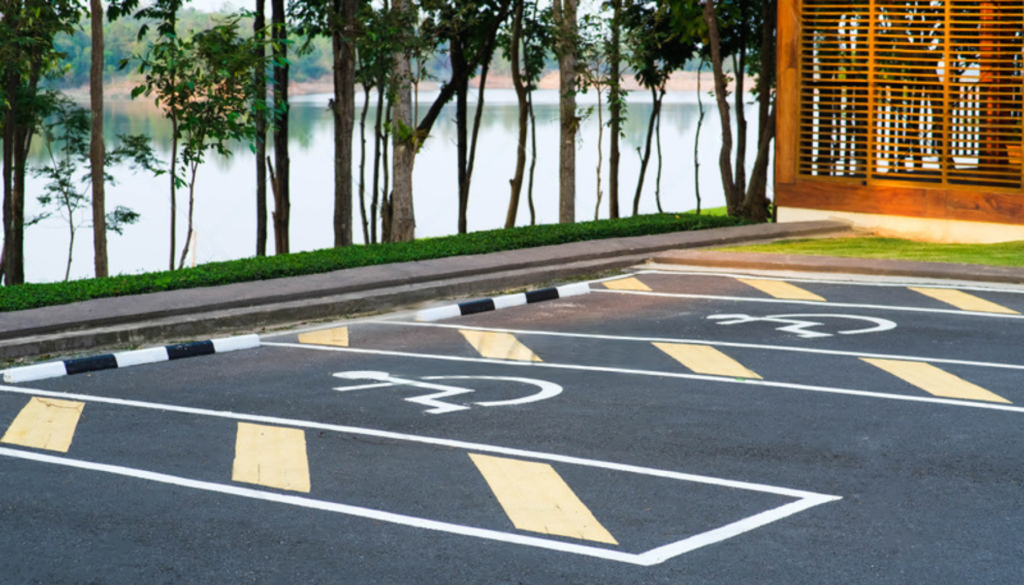
Creating inclusive spaces starts in the parking lot. Handicap parking spaces, also known as accessible parking spaces, are essential for providing safe and convenient access for people with disabilities. In Canada, accessibility laws require businesses to include designated parking spots for wheelchair users and individuals with mobility challenges.
So, how many accessible parking spaces does your business need? That depends on your province or municipality—but all businesses must comply with regulations designed to ensure equitable access.
In this guide, we’ll explain the importance of handicap parking, provide general Canadian standards, and share tips for compliance with local accessibility laws.
Why Handicap Parking Spaces Are Important
Accessible parking is about removing barriers—both physical and social. It ensures that individuals with disabilities can safely and independently access businesses, workplaces, healthcare facilities, and public spaces.
For customers, employees, or visitors who use wheelchairs, walkers, or have limited mobility – close proximity to entrances, extra space to deploy ramps, and visible signage are not luxuries—they are necessities.
Accessible parking promotes:
- Equal participation in public life
- Safer access to services
- Compliance with legal requirements
For businesses, it’s not just about checking a box—it’s about creating inclusive, respectful spaces for all.
Canadian Regulations for Handicap Parking Spaces
Canada’s accessible parking requirements are primarily enforced through provincial building codes, municipal bylaws, and federal acts like the Accessible Canada Act. Each province or territory has slight variations, but the core principles are consistent:
- A specific number of accessible spaces must be designated based on total parking capacity.
- Spaces must include clear vertical signage and signage on the pavement featuring the international accessibility symbol.
- Spaces must be wide enough to accommodate mobility devices and vehicle lifts.
- Surfaces must be level, well-maintained, and located near accessible building entrances.
✅ Important: Always consult your local municipality’s building and zoning regulations, as bylaw enforcement may vary at the city level.
How Many Accessible Spaces Are Required?
The following parking regulation guidelines are based on CSA B651-23, a federal standard widely adopted across Canada. However, requirements may vary slightly depending on your province or municipal bylaws. It is strongly recommended to verify with your local authorities to ensure compliance with specific regional or city regulations.
A designated accessible parking space shall
- Be at least 2600mm wide;
- Have an access aisle at least 2000mm wide for parking spaces perpendicular to the roadway;
- Have a rear access aisle at least 2000mm wide and a 5500mmx2000mm long unobstructed embarking area for parking spaces parallel to the roadway
| Total Parking Spaces | Minimum Accessible Spaces Required |
| 1–50 | 1-3 |
| 51–100 | 2-4 |
| 101 – 200 | 4-8 |
| 201 – 300 | 5-10 |
| 301 – 500 | 6-12 |
| Over 500 | 6-12 + 1 every 100 spaces |
Note: Some provinces also require van-accessible spaces with extra width and a designated access aisle.
Tips for Compliance
Follow these tips to make sure your business meets Canadian handicap parking space requirements:
✅ 1. Check Local Regulations
Before designing or redesigning your lot, consult your local building department or zoning office for the latest codes.
✅ 2. Use Proper Signage
Ensure each accessible parking spot has:
- The international symbol of accessibility
- Signs mounted at the correct height and visibility
- Indications of van-accessibility (if applicable)
✅ 3. Maintain Your Spaces
Regularly inspect for:
- Faded paint
- Snow or debris blocking spaces or signage
- Cracked pavement or trip hazards
✅ 4. Train Your Staff
Ensure staff understand who can use accessible parking spaces and how to handle violations respectfully.
Conclusion
Ensuring your parking lot meets handicap parking space requirements is a simple but powerful way to create a more inclusive environment. Not only does it help people with disabilities navigate your business safely, but it also helps you avoid penalties, meet legal obligations, and demonstrate leadership in accessibility.
Looking to improve your site’s accessibility or conduct a compliance audit?
👉 Contact Accessibility Partners to speak with an accessibility expert today.
Faqs
It depends on your total number of parking spaces. Typically, 1-3 spaces are required for every 1–50 spots, with more required as capacity increases.
No. While most follow similar principles, specific space dimensions and signage regulations vary by province and municipality.
Spaces must have access aisles, clear signage, level surfaces, and be close to accessible entrances.
Yes. Even small businesses with a parking lot must provide at least one accessible parking spot if the lot is customer- or employee-facing.
Only vehicles displaying a valid accessible parking permit (also known as a disability parking permit) may use these spaces.
Fines vary by province and can range from $300 to over $1,000 per violation, along with potential legal action or enforcement orders.